Moving to Baltimore: Rowhouses, Rents, and What a Move Really Costs

Undergrads Moving Crew7 min read
Baltimore's typical home value is about half the national figure, and rents run below it too. This guide covers what that buys you by neighborhood, plus the rowhouse stairs, permit parking, and snow rules that shape a local move.
Wondering what it's like to move to Baltimore? Well, you came to the right place. Baltimore's typical home value sits around $185,000, roughly half the national figure of about $366,000 (Zillow, Sep 2026). That one number explains a lot of the city's pull, and a fair amount of its quirks.
Quick disclosure: we're Undergrads Moving, and labor-only moving is our whole business, so take the plug near the end with a grain of salt. The research is real, though, and every figure below comes with a source and a date.
Why people move to Baltimore
Jobs first. Johns Hopkins calls itself Maryland's largest private employer, with more than 50,000 people working for it in the state (Johns Hopkins HR, 2026), and the hospitals and universities around it pull in residents, fellows, grad students, and staff every summer. The University of Maryland's downtown campus, MICA, and Loyola add to the steady flow of people who need an apartment by August.
Second, Washington. The MARC Penn Line runs about 39 miles between Baltimore Penn Station and Washington Union Station, and it's the only MARC line with weekend service. Plenty of people pay Baltimore rent and ride the train to a DC paycheck.
Third, the city itself: a working harbor, rowhouse blocks with real neighborhood identity, and food and bar scenes in Fells Point, Hampden, and Federal Hill that punch above the city's size.
Cost of living in Baltimore
Housing is where Baltimore stands out. Rents sit below the national typical rent, and home values sit far below it. Zillow's September 2026 numbers:
| Measure | Baltimore | United States |
|---|---|---|
| Typical rent (Zillow Observed Rent Index) | $1,762 | $1,932 |
| Rent change, past year | +3.6% | +2.7% |
| Typical home value (Zillow Home Value Index) | $184,800 | $366,200 |
| Home value change, past year | −3.7% | +1.2% |
Step outside the city line and the gap closes: the Baltimore metro's typical rent is about $1,937, right at the national number (Zillow, Sep 2026). If a low rent is the reason you're coming, look inside city limits first.
Baltimore neighborhoods worth a look
Rents below are Zillow's typical rent for the ZIP code that covers each neighborhood (Sep 2026), so a ZIP can include a neighbor or two. Treat them as a starting point for your search.
Fells Point: cobblestones and the waterfront
The old maritime district, with brick streets, harbor views, and bars on every corner. It suits people who want to walk everywhere and don't mind weekend noise. The 21231 ZIP ran about $2,320 a month, the highest of the six here.
Canton: rowhouses, rooftop decks, O'Donnell Square
East of Fells Point and a bit calmer, Canton is popular with young professionals who want a rowhouse with a roof deck and a waterfront path for running. The 21224 ZIP, which also covers Highlandtown, ran about $2,160.
Federal Hill: next door to the Inner Harbor
Across the harbor from downtown, with Cross Street Market and the park on the hill itself. Good for people working downtown or at the stadiums. The 21230 ZIP, which includes Locust Point, ran about $2,190.
Hampden: The Avenue and a slower pace
Hampden's main drag is 36th Street, known locally as The Avenue, lined with shops and restaurants. It fits people who want a neighborhood feel close to Hopkins' Homewood campus and I-83. The 21211 ZIP ran about $2,160.
Mount Vernon: apartments in grand old buildings
Built around the original Washington Monument, Mount Vernon mixes converted mansions with apartment towers, and it's walkable to Penn Station. It's one of the better values on this list: the 21201 ZIP ran about $1,470.
Charles Village: the Hopkins neighborhood
Painted rowhouses and student-heavy blocks right next to Homewood. Grad students and Hopkins staff fill it, and leases turn over in a rush every August. The 21218 ZIP ran about $1,450, the lowest of the six.
Getting around Baltimore
Most people drive. I-83, the Jones Falls Expressway, carries traffic from downtown north toward Hampden and the county, and the I-695 Beltway circles the city. Both back up at rush hour, which matters on move day if your truck has to cross town at 5 p.m.
The Key Bridge, which carried I-695 across the outer harbor, collapsed in March 2024. The Maryland Transportation Authority now projects the replacement opening in late 2030 (CBS Baltimore, Nov 2025), so trips that used it run through the Fort McHenry or Harbor tunnels instead.
Transit covers the basics: the Light RailLink connects downtown to Penn Station and BWI, and the MARC Penn Line handles the DC commute.
Local moving gotchas
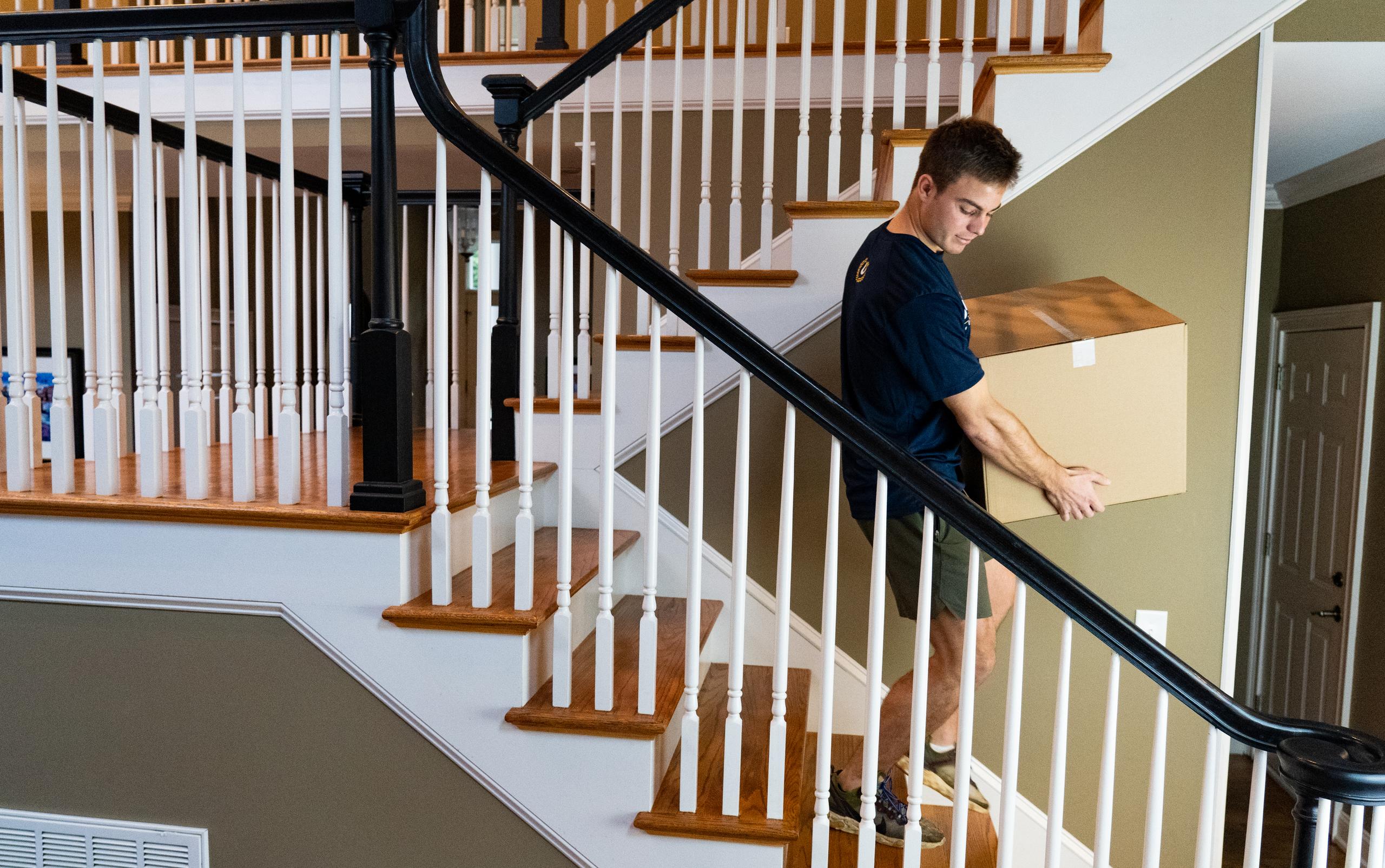
- Rowhouse stairs. Rowhouses make up roughly 52% of the city's housing (Goldseker Foundation, 2020), and many have steep, narrow staircases with a tight turn at the top. Measure the stairwell, not just the sofa.
- Permit parking. The city has 48 Residential Permit Parking areas. Most let residents get free single-day visitor permits, but not every area does (Area 28 issues none), so check the Parking Authority's rules for your new block.
- Holding the curb. Baltimore DOT handles curb lane closures through a temporary right-of-way permit, now filed through the city's online permitting system. Start a week or more ahead if your street is tight.
- High-rise paperwork. Towers in Harbor East, the Inner Harbor, and Mount Vernon commonly want a Certificate of Insurance from your movers and a booked freight elevator. Ask management for both as soon as you sign.
- The university calendar. In 2026, Hopkins first-years moved in on August 23 and Loyola's on August 27. Late August is the hardest time of year to get a truck or a crew near Homewood and Charles Village.
- Snow emergencies. In Phase 2 of the city's snow emergency plan, parking on designated emergency routes is banned and vehicles can be towed. A rental truck counts.
What a Baltimore move costs
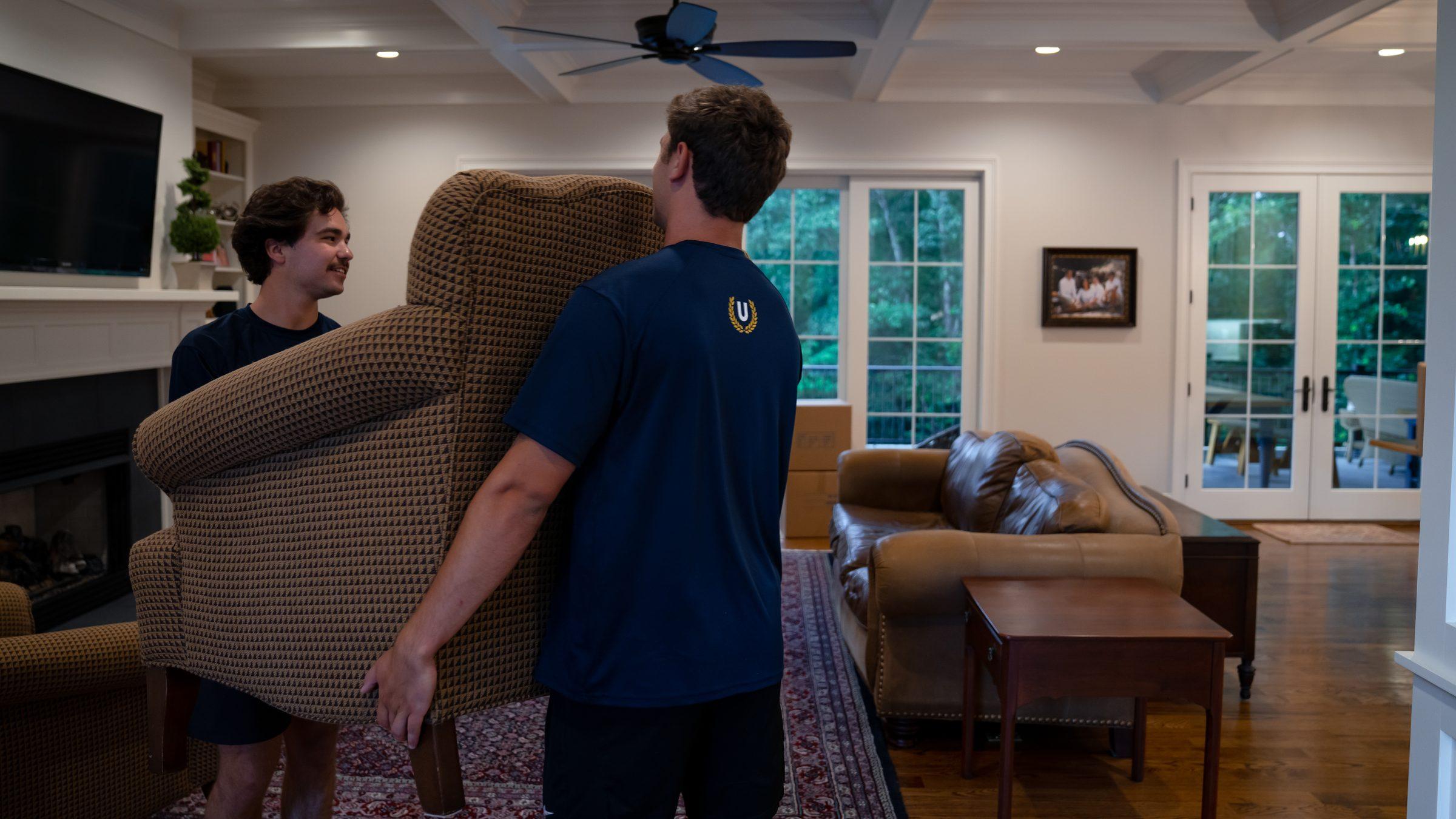
We're labor-only: you rent the truck, and a crew of university students loads it at one end and unloads it at the other. Two movers run $112 per hour, the rate is locked before we start, and most local moves run $200–$500 in labor. There are no stair fees and no fuel surcharges, which matters in a city where half the housing has a staircase.
The Undergrads comparison: a one-bedroom Fells Point walk-up that takes two movers three hours comes to $336 in labor, stairs included, plus the truck you rent. A full-service company folds its truck, driver, and overhead into its hourly rate, so the same three hours costs you more. You can check dates and get a quote on our Baltimore movers page.
When we're not the right call: if you're moving across the country, or you need packing, crating, and a truck for a big house in one booking, hire a licensed full-service mover.
Bottom line
Baltimore gives you city living at prices that are rare on the East Coast, especially if you buy. The trade-offs are physical: narrow stairs, tight streets, permit parking, and an August rush around Hopkins. Plan for those and a Baltimore move fits in a morning or an afternoon. If you want help with the heavy part, we bring a locked hourly rate, university-student crews, a $50 Show-Up Guarantee, and we're licensed and insured. The math is the argument.
Frequently asked questions
Is Baltimore cheaper than the national average?
For housing, yes. Zillow's September 2026 data puts Baltimore's typical rent at about $1,762 versus $1,932 nationally, and its typical home value at about $185,000 versus about $366,000. The wider metro's rent is about $1,937, close to the national figure.
What are the most expensive neighborhoods to rent in Baltimore?
Among the six neighborhoods in this guide, the Fells Point ZIP (21231) ran highest at about $2,320 a month, followed by Federal Hill's 21230 at about $2,190. Mount Vernon and Charles Village ran around $1,450–$1,470 (Zillow, Sep 2026).
Do I need a parking permit for a moving truck in Baltimore?
It depends on the block. The city has 48 Residential Permit Parking areas, and most offer free single-day visitor permits, though Area 28 issues none. To reserve curb space, Baltimore DOT issues temporary right-of-way permits, so apply a week or more ahead.
When is the worst time to move in Baltimore?
Late August. In 2026, Johns Hopkins first-years moved in on August 23 and Loyola's on August 27, and off-campus leases near Homewood turn over the same weeks. Snow emergencies in winter can also force a reschedule if your street is an emergency route.
How much do movers cost in Baltimore?
Undergrads charges $112 per hour for two movers, locked before the move, with no stair or fuel fees. Most local moves run $200–$500 in labor, and the truck rental is separate.