Picking a moving truck size shouldn't keep you up at night, but here we are. Go too small and you're making a second trip at 9 PM with your dresser sticking out the back. Go too big…
Picking a moving truck size shouldn't keep you up at night, but here we are. Go too small and you're making a second trip at 9 PM with your dresser sticking out the back. Go too big and you're paying for empty cargo space and wrestling a 26-footer through a Trader Joe's parking lot.
The good news: it's actually pretty straightforward once someone breaks it down without selling you cubic-feet math. Rental companies love listing specs in cubic feet, which tells you absolutely nothing unless you happen to think in 3D for fun. So let's translate this by what people actually own and where they're actually moving from.
Quick Answer: Truck Size by Bedroom Count
Studio or 1-bedroom, minimal furniture → 10–15 ft truck 1-bedroom or small 2-bedroom → 15–20 ft truck 2-bedroom apartment/house → 20–26 ft truck 3-bedroom house or more → 26–30 ft truck or larger
Real customer: "I was just gonna get a U-Haul, probably one size for, like, a one bedroom." After we walked through their actual furniture list, they ended up needing the next size up because nobody had counted the sectional or the giant bookshelf. The lesson: list your stuff first, then book the truck.
If you're somewhere in the middle (1-bedroom with a sectional and a library's worth of books), bump up one size. The $20 cost difference between a 15 and a 20 is nothing compared to the soul-crushing experience of running back to your old apartment for round two.
Moving in Texas and want a real number before you book? Run your inventory through the Austin move calculator, it'll spit out a truck size and an hours estimate in about two minutes.
The Smarter Way: Truck + Labor, Not Full-Service
Before we get into sizes, quick reality check on the model. There used to be two options for moving: pay a full-service company a small fortune, or beg three friends with the promise of pizza and ruin a friendship. Now there's a much better middle path, rent the truck yourself, hire labor for the brutal parts.
Here's why most of our customers go this route:
- You only pay for what's hard. Full-service companies bake their truck, fuel, dispatching, insurance, and corporate overhead into one big number. When you rent the U-Haul (or Penske, or Budget) yourself and just hire crews to load and unload, you typically save around 30%.
- You control the timeline. You pick up the truck when you want, you keep it as long as you need, and you book us for the specific windows when the heavy lifting actually happens.
- You skip the back injury. The driving part is fine. The "carry a queen mattress down three flights of stairs" part is where people get hurt.
Cool, now let's pick the right truck.
How U-Haul, Penske, and Budget Truck Sizes Actually Compare
All three rental companies use similar sizing, but their names differ slightly. Here's the translation, smallest to largest:
Cargo van → ~250–280 cubic feet For a studio with a futon and a few boxes, or moving someone in or out of a dorm. Drives like a regular van. Easy to park. Fine if you own approximately 14 things.
Pickup truck (8-ft bed) → not really a "move" vehicle This is for hauling a single appliance, a mattress, or whatever you bought at IKEA. If you're using this to move out of an apartment, you've underestimated.
10 ft truck → ~400 cubic feet Best for studios or minimalists. Think one room of a college dorm plus boxes. A king bed will eat most of it.
15 ft truck → ~600 cubic feet Sweet spot for a 1-bedroom apartment. Fits a bed frame, couch, dresser, desk, nightstand, and boxes stacked to the roof. Comes with a loading ramp on most rentals (huge upgrade from the cargo van).
17 ft truck → ~865 cubic feet The "in-between" size you'll see at U-Haul. A loaded 1-bedroom or a small 2-bedroom. Honestly, if a 17 is the same price as a 20, just take the 20.
20 ft truck → ~1,000 cubic feet The "small 2-bedroom" size. Handles a bed, couch, dining table, dressers, and a reasonable amount of kitchen stuff. Most apartment-to-house moves land here.
26 ft truck → ~1,400 cubic feet For a full 2-bedroom house or 3-bedroom apartment. You can fit two couches, multiple beds, a dining set, and storage without playing Tetris.
30 ft truck or larger → 1,600+ cubic feet For 3+ bedroom houses, garages full of stuff, or anyone who has been collecting furniture for a decade.
The trick most people miss: rental companies measure cargo area only. They don't count the cab, engine, or hitch. So the "26-foot truck" isn't 26 feet of usable space. Compare cubic footage when you're shopping across brands, not the headline number on the side of the truck.
What Actually Fits in Each Truck
Let's get granular. Here's what typically fits, assuming standard furniture:
10 ft truck (Studio / dorm)
- Twin or full bed + mattress
- Loveseat or small couch
- Dresser
- Small desk or table
- 4–6 medium boxes
- Kitchen stuff for someone who only owns one pan
15 ft truck (1-bedroom)
- 1 queen or full bed frame + mattress
- 1 couch (standard, not sectional)
- 1 dresser
- 1 nightstand
- 1 desk or small dining table
- 4–6 medium moving boxes
- Kitchen boxes
- Closet and hangers
You'll have some overhead space, but it's snug once everything's loaded.
20 ft truck (2-bedroom)
- 1 queen bed + 1 full or twin bed
- 1 couch
- 1–2 dressers
- 2 nightstands
- 1 dining table or desk
- 1 TV stand or bookshelf
- 10–15 medium boxes
- Kitchen, hangers, overflow
This is the most common size for apartment moves and works for a small house too.
26 ft truck (2-bedroom + sectional, or 3-bedroom)
If your 2-bedroom has a sectional sofa (which takes up about 40% more space than a regular couch), bump to a 26. Same deal if you have a dining set that seats 6+, multiple bookcases, or a lot of appliances.
One customer described it perfectly: "There's one queen bedroom suite, a hope chest, TV stand, a desk, and then clothes and boxes." That's a 2-bedroom on paper, but with a few larger pieces it's a 26-footer in practice.
How to Measure If You're Not Sure
Straddling two sizes? Grab a tape measure and check your biggest items:
- Couch width: Standard is 84 inches. A sectional can run 120+.
- Bed frame: A queen is roughly 60 x 80 inches. A king is 76 x 80.
- Dresser: Usually 30–40 inches tall, 36–48 inches wide.
- Dining table: A 4-seater is around 36 x 48. A 6–8 seater is 48 x 72 or bigger.
Once you have dimensions, sketch a rough layout against the truck bed (rental websites publish the interior dimensions). If it's tight, go up. The bigger truck is almost always cheaper than a second trip or a busted dresser.
Also: measure the doorways. This sounds dumb until your couch doesn't fit through your new front door and you're standing on the lawn at 4 PM Googling "how to disassemble a sleeper sofa."
Common Mistakes: Too Big, Too Small, and Goldilocks
Mistake #1: Overestimating a studio. People with studios often pick a 10-footer and it works. But if you have a king bed (not a queen) or a lot of books and art, suddenly you're cramming. Go 15 ft and breathe.
Mistake #2: Underestimating a 1-bedroom with one big piece. You think "15 ft, easy," then you remember the sectional. A 15 fits a normal 1-bedroom. It does not fit a 120-inch sectional plus everything else. That's a 20 ft moment.
Mistake #3: Forgetting padding and equipment takes up space. Rental companies list interior dimensions, but furniture pads, dollies, and tie-downs eat 10–15% of usable space. Plan for that.
Mistake #4: Forgetting the kitchen. Plates, pans, glassware, small appliances, they add up shockingly fast. A 10 ft feels generous until half of it is kitchen boxes.
Mistake #5: Not thinking about weight. Trucks have a gross vehicle weight rating. You're unlikely to hit it with a normal household, but if you're moving a lifetime of books, a gun safe, or gym equipment, look it up before you pack. Overloading is a real ticket-and-tow risk on the highway.
Mistake #6: Not checking the height of your route. A 26-footer is around 12'6" tall. Your old apartment's parking deck is not. Neither is the McDonald's drive-thru you stopped at for breakfast. Plan accordingly.
15 ft vs. 20 ft: The Real Trade-Off
The jump from a 15 to a 20 is usually $15–25 more per day. That's nothing. A 20 gives you breathing room and saves the stress of cramming a sofa in sideways.
If you're not sure, take the 20. It's the most versatile size for apartment moves and the extra cost is genuinely worth the peace of mind.
Pro Loading Tips (Or, Why Crews Fit More Than You Will)
Even with the right truck, how you load it determines whether everything fits and whether anything breaks. The pros do this all day. Here's what they actually do:
- Heavy stuff goes forward and low. Couches, dressers, washers, they ride against the cab wall, on the floor. This keeps the truck balanced and the load stable.
- Use vertical space. Boxes go to the ceiling. Most amateur loaders waste the top three feet of every truck because they don't stack.
- Distribute weight side-to-side. A truck that's heavy on one side handles like a drunk shopping cart at highway speeds.
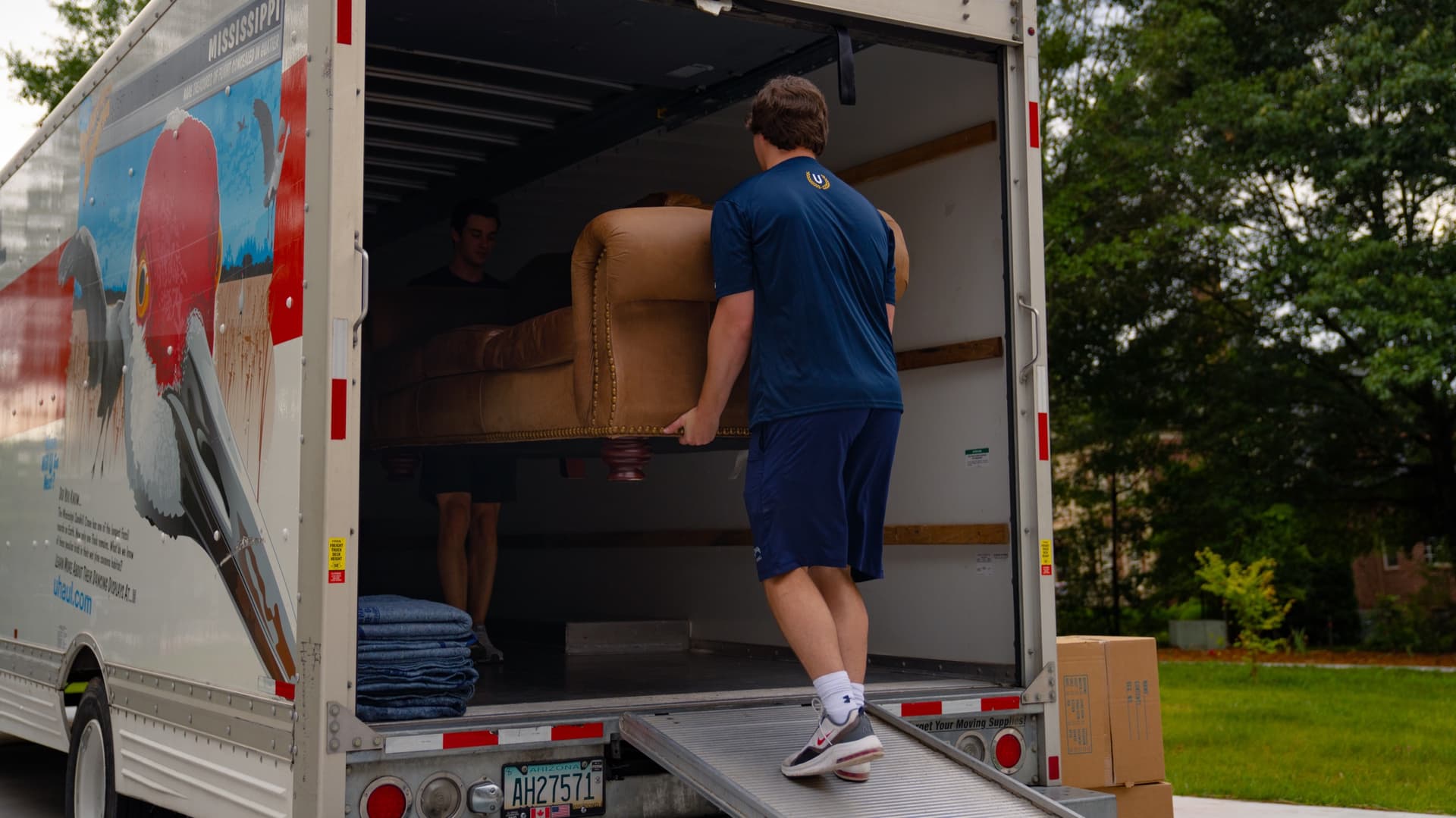
- Furniture pads are non-optional. Rent or buy them. Wrap dressers, headboards, anything wood. Skipping pads is how you turn a $600 dresser into firewood.
- Build a wall at the back. Boxes go in last, stacked tight against the back wall, to keep everything from shifting on the road.
- Disassemble what you can. Bed frames, table legs, anything modular. It packs flatter and you get an extra 15% of space back.
When our crews load a truck, the goal is "one trip", and that's usually achievable on a borderline truck size because of how things get stacked. If you're loading yourself, build in a buffer.
What You're Renting: Open-Bed vs. Enclosed
Most rental companies offer open-bed trucks (your stuff is exposed) or enclosed (like a moving van). The footprint is similar, but:
- Open-bed: Cheaper, easier to load, but vulnerable to weather. Fine for a short move on a sunny day.
- Enclosed: More expensive, protects everything, better for long moves or rain.
For moves within the Carolinas or down to Tampa or Austin, an enclosed 20 ft is usually the move. If you're in Charlotte, Raleigh, or Charleston in summer? The afternoon thunderstorm will absolutely come for your couch. (Tampa in August is its own conversation. Just take the enclosed truck.)
Frequently Asked Follow-Ups
Q: Is it cheaper to do two trips with a smaller truck? Almost never. You pay rental and mileage twice, plus your time and your sanity. Renting one size up is almost always cheaper.
Q: Can I fit a king bed in a 10 ft truck? Not comfortably. The frame alone is 76 x 80 inches, that's most of the truck. You'd have no room for a dresser or couch. Go 15 ft minimum.
Q: What if I rent a truck that's too big? You'll waste a little time strapping stuff down so it doesn't slide. Cost difference is $10–25. You won't regret it. Underbooking, on the other hand, can derail the whole day.
Q: Do I need to return the truck where I rented it? Most companies charge extra for one-way moves, but it's usually worth it for longer moves. Factor that into your quote when you're comparing.
Q: Is there a tool that just tells me the right size? For Texas moves, yes, the Austin move calculator walks you through your inventory and recommends a truck size and a crew size. Cuts out the guesswork.
Q: Should I just hire a full-service company instead? You can. It'll cost roughly 30% more, and you give up control of the timeline. The truck-plus-labor model wins for most local and regional moves. Full-service makes more sense for cross-country moves or if you genuinely cannot lift a single box.
The Bottom Line
Most apartment moves fit in a 15–20 ft truck. Most house moves fit in a 20–26 ft truck. If you're unsure, list your furniture, measure the biggest pieces, and call the rental company, they'll walk through it with you. They do this all day.
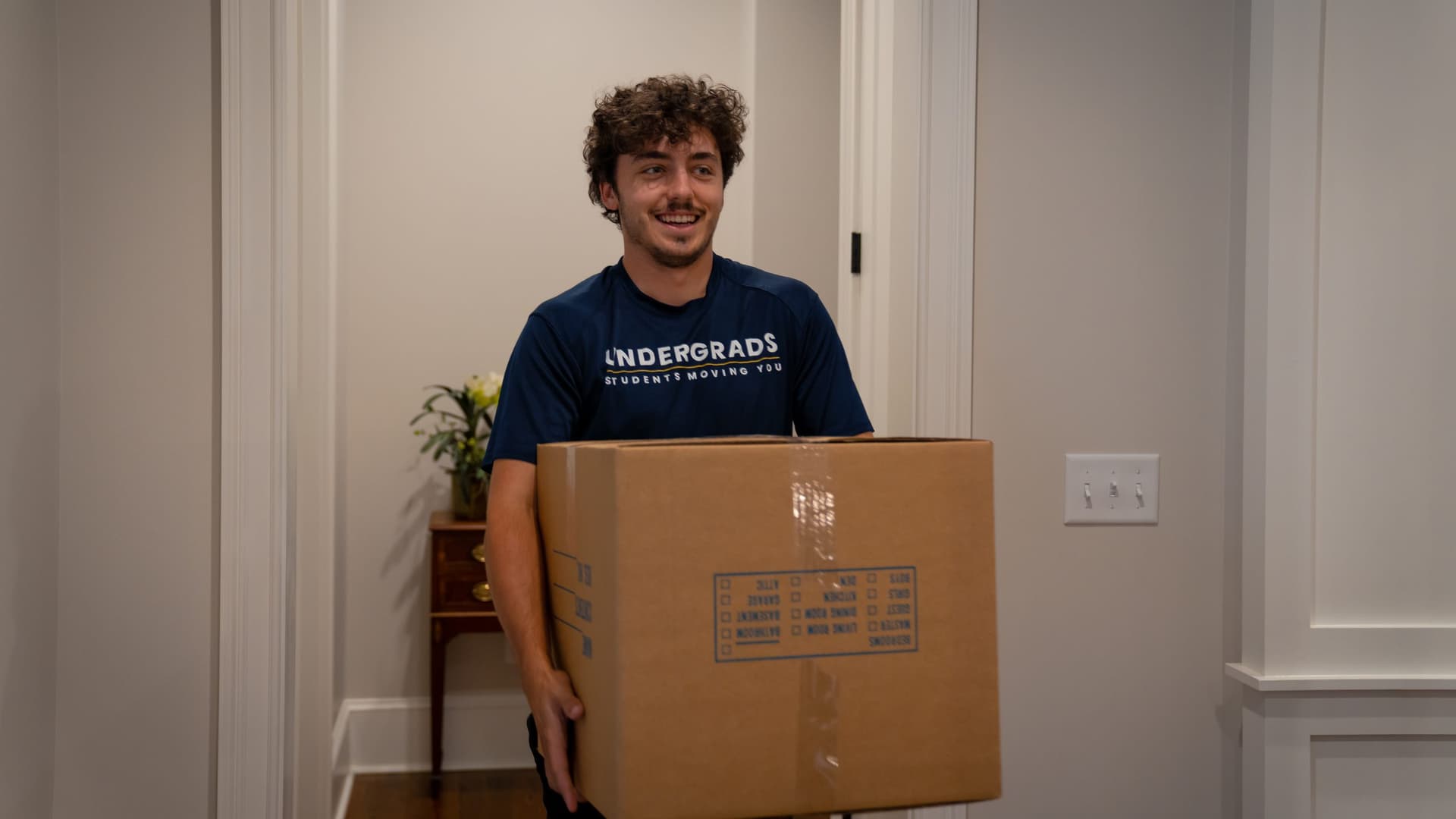
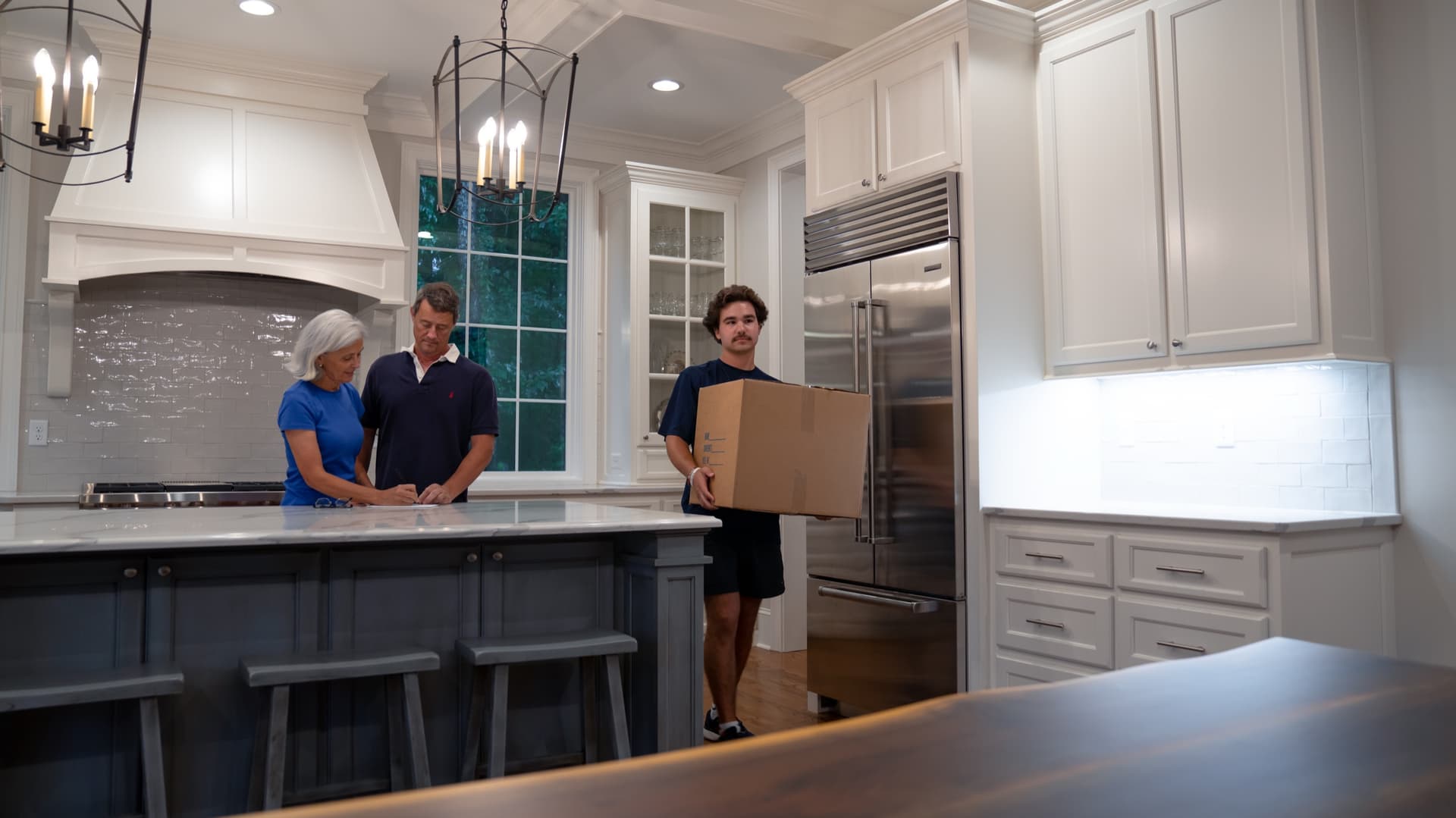
And here's where we come in: Undergrads Moving provides the crew and the gear (dollies, straps, blankets, everything you need to move stuff without breaking it). You rent the truck at U-Haul or Penske, we handle loading, driving, and unloading. You save about 30% compared to full-service movers, and we make sure nothing gets dinged. We'll even sanity-check your truck size when you call to book.
Moving inside Texas? Check out our Austin crew or run the numbers on the Austin move calculator first. Heading to the Gulf Coast? Our Tampa movers can handle the unload end too.
We're students who lift heavy things for reasonable prices. No hidden fees, no corporate BS, just strong kids who'll show up on time and won't break your stuff.
Ready to move? Let's get the truck right the first time.