Hiring moving help used to mean picking a name out of the phone book or asking your buddy with a truck. Now there are platforms, apps, and labor-only companies competing for the job, each with a different model, a different price point, and a different set of trade-offs you won’t fully appreciate until moving day.
Hiring moving help used to mean picking a name out of the phone book or asking your buddy with a truck. Now there are platforms, apps, and labor-only companies competing for the job, each with a different model, a different price point, and a different set of trade-offs you won’t fully appreciate until moving day.
We looked at four popular options for hiring moving labor: HireAHelper, a nationwide marketplace; Thumbtack, a general services platform; Caddy Moving, an app-based moving labor startup; and Undergrads Moving, a labor-only company staffed by trained college students.
If you’re short on time, HireAHelper is a well-established nationwide marketplace where you compare independent movers, solid selection, but quality depends entirely on which provider you book. Thumbtack is a general-purpose services platform that includes movers, but moving isn’t their specialty, and you’re responsible for vetting whoever responds to your request. Caddy Moving is a newer app-based labor marketplace with transparent pricing and same-day availability, but it’s still building its coverage map and your experience depends on whoever gets assigned. Undergrads Moving is a direct-hire labor-only company, not a marketplace, with trained college student crews, a 4.9-star Google rating, and the consistency that comes from hiring an actual company rather than rolling the dice on a platform. All four can save you money compared to a full-service mover. The question is how much risk you’re comfortable taking on to get that savings.
Need a hand on move day?
Undergrads runs background-checked student crews with a locked hourly rate, no stair fees, no fuel surcharges. $5 holds your date, and you pay after the move.
Get my free quote →Moving Help Platforms at a Glance
| Platform | Model | Rating | Pricing | Insurance | Best For |
|---|---|---|---|---|---|
| HireAHelper | Online marketplace | 4.6 ★ (Trustpilot) | $40-$80+/hr (varies by provider) | $1,000 included; optional full-value | Comparing multiple providers nationwide |
| Thumbtack | General services marketplace | ~4.0 ★ (varies) | $40-$120+/hr (pro sets price) | None from Thumbtack; depends on provider | Getting multiple quotes quickly |
| Caddy Moving | App-based labor marketplace | 4.6 ★ | $45-$85/hr per helper | General liability; no-hassle damage claims | Same-day or last-minute moving labor |
| Undergrads Moving | Direct-hire labor company | 4.9 ★ (Google) | $45-80/hr, flat-rate pricing (pay for what you need) | Fully insured, trained, licensed crews | Consistent quality at the best price |
HireAHelper
How It Works
HireAHelper is a nationwide online marketplace that connects you with independent moving labor providers. You enter your ZIP code, move date, and what you need, loading, unloading, or both, and the platform shows you available providers in your area, ranked by rating and price. You pick the one that looks right, book online, and pay through the platform after the job is done.
The model is straightforward. HireAHelper doesn’t employ the movers directly. They’re a middleman connecting you with small moving companies and independent crews who set their own rates and manage their own operations. HireAHelper handles the booking, payment processing (via escrow), and provides a layer of damage coverage.
Booking Process
The booking process is relatively smooth. Enter your details, browse available providers, read reviews, and book, all online. HireAHelper recommends booking at least two weeks in advance, though last-minute options exist depending on your area. You can choose between “Movers Only” (you provide the truck) or “Movers + Truck” packages. Your credit card is authorized one to two days before the job, and payment is held in escrow until the work is complete.
Pros
HireAHelper’s biggest strength is selection. With over 1,700 vetted providers nationwide, you can compare multiple options side by side, pricing, reviews, credentials, before committing. Every booking includes $1,000 in damage coverage at no extra cost (at $0.60 per pound), with optional full-value coverage available for an additional fee. They also offer free cancellation up to 48 hours before your move, and their customer service team operates 365 days a year.
The platform has completed over a million moves, carries an A rating with the BBB, and holds a 4.6-star Trustpilot rating from more than 9,000 reviews. That’s a meaningful track record.
Cons
The marketplace model is a double-edged sword. Because HireAHelper doesn’t employ the movers, your experience depends entirely on which provider you select. One crew might be outstanding. The next might show up late, work slowly, or handle your furniture carelessly. Reviews help, but they’re not a guarantee, and the provider who had five stars last month might have a new crew this month.
Cancellation policies also tighten as your move date approaches: cancel within 24 hours and you’re charged the full amount. Rates vary significantly by provider and location, which means you’ll need to do real comparison shopping rather than trusting the first quote you see. And while the included damage coverage sounds reassuring, $0.60 per pound means your $2,000 couch is covered for about $60 in repair value unless you pay for the upgrade.
Thumbtack
How It Works
Thumbtack is a general-purpose services marketplace, think of it as the Yellow Pages rebuilt for the internet. You can hire a plumber, a photographer, a dog walker, or a mover, all from the same platform. For moving specifically, you describe your project, answer a few questions about the size and scope of your move, and Thumbtack matches you with local professionals who send you quotes.
The key distinction with Thumbtack is that moving is just one of hundreds of service categories. The platform wasn’t built specifically for moving, and the professionals who respond to your request range from licensed, insured moving companies to solo operators with a truck and a strong back.
Booking Process
Thumbtack’s quote-request process is simple. Enter your move details, origin, destination, size, date, and you’ll receive responses from multiple pros, often within hours. You can review their profiles, read reviews from past customers, compare pricing, and message them directly before committing. There’s no obligation to book, which makes it useful for price shopping even if you end up hiring someone elsewhere.
The booking itself happens between you and the professional. Thumbtack facilitates the introduction, but the contract, payment terms, and logistics are worked out directly with whoever you choose.
Pros
The biggest advantage of Thumbtack is speed and breadth. You can get multiple competitive quotes in a single afternoon without making a single phone call. The platform has national coverage, and for popular metro areas, you’ll often see a dozen or more movers bidding for your business. The comparison tools are useful, you can see ratings, reviews, and estimated pricing in one place.
Thumbtack also doesn’t lock you into anything. You can request quotes purely for research, compare them against other options, and walk away without penalty. For someone who wants to understand what moving help costs in their area before committing, it’s a decent starting point.
Cons
Thumbtack’s generalist model is also its biggest weakness for moving. Because the platform serves every service category imaginable, the movers on Thumbtack are self-selected, anyone who passes a basic background check and meets minimum licensing requirements can list themselves. The vetting is lighter than what you’d get from a moving-specific platform, and there’s no Thumbtack-backed quality guarantee.
More importantly, Thumbtack provides zero damage protection. If a mover breaks your TV, scratches your hardwood floors, or damages furniture, your recourse is with the individual provider, not Thumbtack. Some movers carry their own insurance, but coverage varies wildly, and verifying it is your responsibility before booking.
The quote-request model also means you’re fielding calls and messages from multiple providers, which some people find overwhelming. And because movers pay Thumbtack per lead, that cost gets baked into what they charge you, meaning the final price may not be as competitive as it initially appears.
Caddy Moving
How It Works
Caddy Moving is a newer player in the moving labor space, founded in 2021 and headquartered in Austin, Texas. They operate as an app-based marketplace connecting customers with vetted moving helpers (called “Caddies”) for on-demand or scheduled labor. Like HireAHelper, they’re a labor-only platform: you provide the truck, they provide the muscle.
Caddy has grown quickly, now serving over 75 cities across 35+ markets, and claims to have completed more than 30,000 moves. Their pitch is affordability, transparency, and speed, including same-day availability in many markets.
Booking Process
Caddy’s booking process is designed around simplicity. You book online, select how many helpers you need, choose your time window, and get a transparent price quote before confirming. There’s no upfront payment required, you pay after the job is done and you’re satisfied. They advertise low minimums (as little as one hour), which makes them flexible for smaller jobs like loading a storage unit or rearranging furniture.
Same-day and next-day availability is a genuine differentiator. If your mover cancels at the last minute or you realize the night before that you need help, Caddy positions itself as the backup plan that actually works.
Pros
Caddy’s pricing is competitive, they claim 40% savings compared to full-service movers, with hourly rates running $45 to $85 per helper depending on your market. The no-deposit, pay-after-completion model reduces risk for the customer. They include general liability insurance and offer a no-hassle damage claims process (submit within seven days with photos, get reimbursed within one to three business days).
The 5% military discount is a nice touch, and their cancellation policy is reasonable, free if you cancel more than 24 hours out. For someone who needs moving labor quickly and wants to know exactly what they’ll pay, Caddy delivers a clean, straightforward experience.
Cons
Caddy is still a marketplace, which means the helpers assigned to your job are independent workers, not employees of a single company. While they’re background-checked and vetted, the experience can vary from one Caddy to the next. You won’t have the same level of crew consistency you’d get from a company that trains and manages its own teams.
Their damage protection also has notable exclusions: particleboard furniture, natural materials like marble or granite, electronics, oversized items, and reassembled furniture are all excluded. If your IKEA bookshelf or granite-top table gets damaged, you’re likely out of luck.
Geographic coverage, while growing, is still limited to around 75 cities. If you’re in a smaller market or rural area, Caddy may not be an option. And because the company is only about five years old, the long-term track record is thinner than more established alternatives.
Undergrads Moving
How It Works
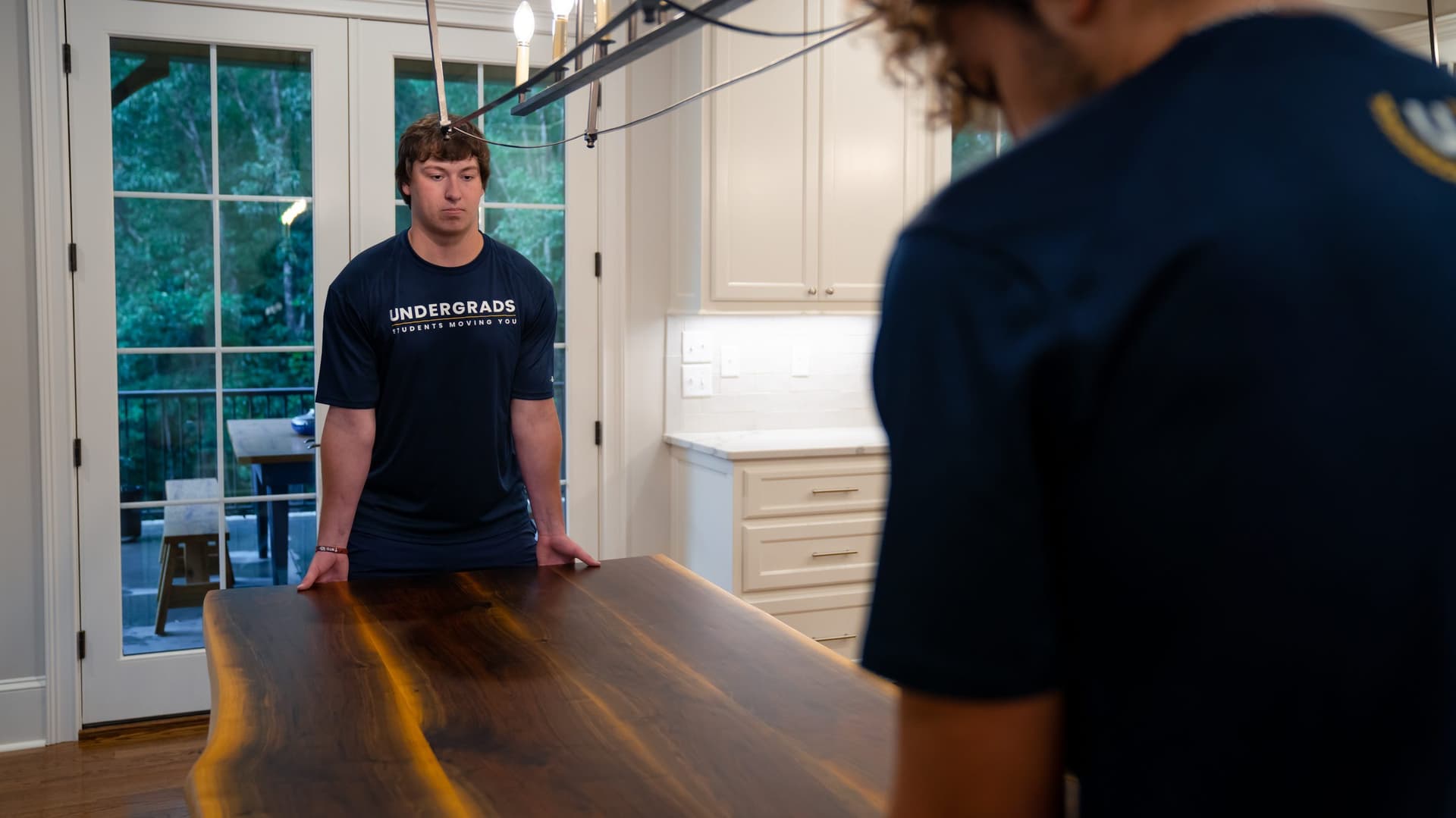
Undergrads Moving takes a fundamentally different approach from the three platforms above. It’s not a marketplace. It’s not an app that matches you with random contractors. It’s a moving labor company, a real one, with trained crews, a hiring process, and direct accountability for the quality of your move.
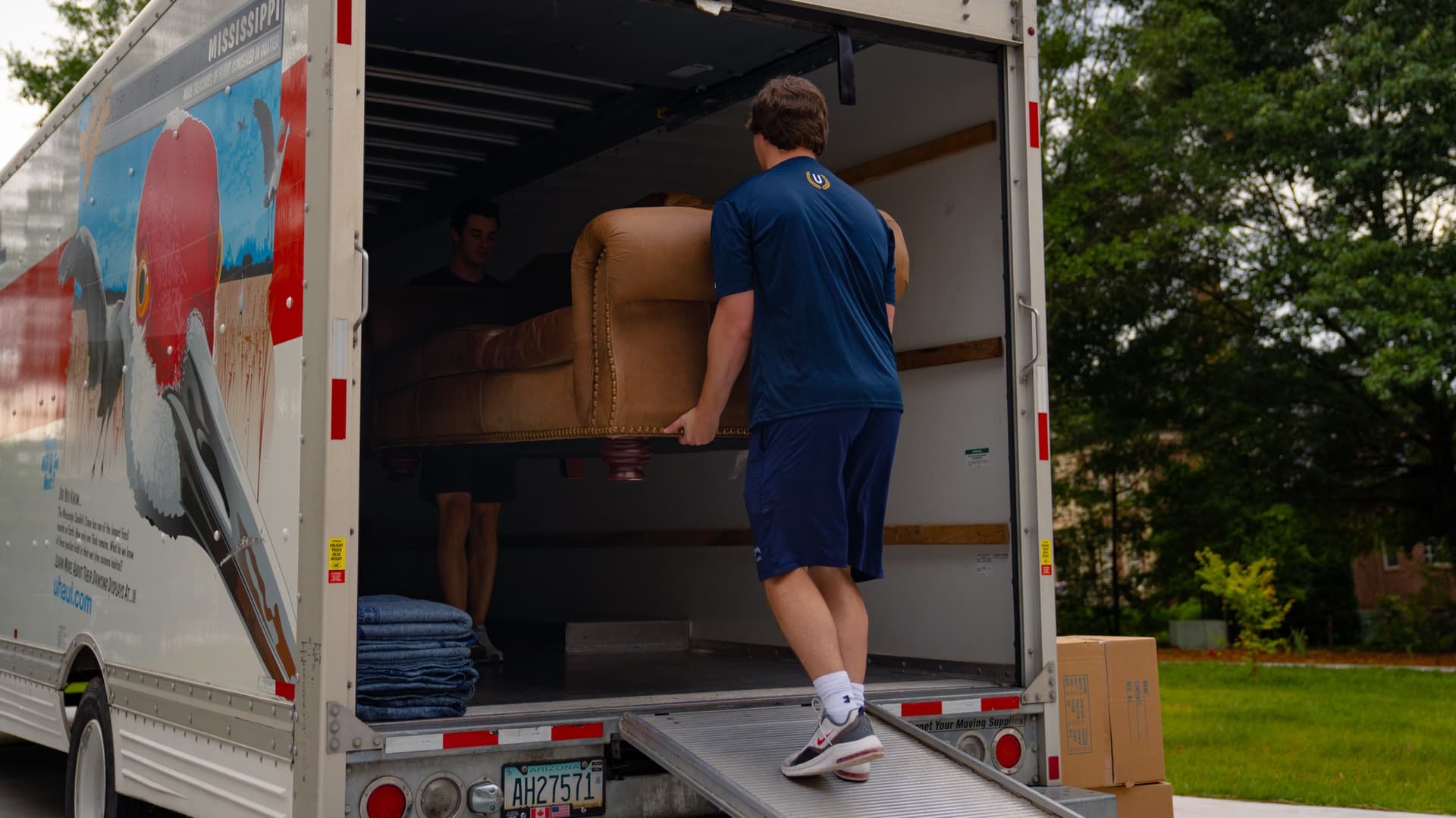
The model is labor-only: Undergrads provides the crew, you rent the truck. Founded in 2017 in Clemson, South Carolina, the company staffs its crews with local college students who are trained, insured, and managed by the company itself. That distinction matters more than it might sound. When you book Undergrads, you’re hiring a company. When you book through a marketplace, you’re hiring whoever happens to be available.
Booking Process
Booking through Undergrads is straightforward. You get an instant online quote through their website in under two minutes, pick your move date, start time, type of move (load, unload, load + unload, or in-house rearranging), and you’ll see transparent pricing before you commit. You can also call their team directly at (864) 256-1166 to talk through your move and get guidance on crew size and timing.
There are no hidden fees, no surge pricing, and no deposit games. You know what you’re paying before anyone shows up.
Pros
The advantages start with consistency. Because Undergrads hires, trains, and manages its own crews, rather than farming the work out to whoever signs up on an app, you get a level of reliability that marketplaces can’t match. Their movers know how to wrap furniture, handle tight stairwells, and work efficiently because they’ve been trained to, not because they watched a YouTube video the night before.
The numbers back it up. Undergrads holds a 4.9-star Google rating across more than 26,000 customer interactions, the highest of any option on this list by a significant margin. That kind of consistency at scale doesn’t happen by accident.
Cost-wise, the labor-only model saves 40-60% out of pocket compared to hiring a full-service moving company. You rent a truck from U-Haul, Penske, or Budget (which typically runs $80 to $180 depending on the size and distance), and Undergrads handles everything else. On a move that would cost $2,500 with a full-service company, you might spend $1,000 to $1,500 total between the truck rental and the Undergrads crew.
There’s also a social mission that separates Undergrads from the pack. The company was built to help college students earn money, develop professional skills, and build their resumes, and they’ve donated over $10,000 to scholarship programs. It’s a business model that works for the customer and the crew.
Cons
The labor-only model means you’ll need to handle the truck logistics yourself, renting it, driving it, and returning it. For most people that’s a minor inconvenience in exchange for significant savings, but if you want a completely hands-off experience, a full-service mover is a simpler (and more expensive) path.
Undergrads currently serves 13 markets across five states: North Carolina (Charlotte, Raleigh, Durham), South Carolina (Charleston, Clemson, Columbia, Greenville, Myrtle Beach), Kentucky (Lexington), Texas (Austin), and Florida (Jacksonville, Orlando, Tampa). That footprint is growing, but if you’re outside their coverage area, you’ll need to look elsewhere.
The Bottom Line
All four of these options can save you money compared to a traditional full-service moving company. The real question is what you’re optimizing for.
If you want the widest selection of providers nationwide and don’t mind shopping, HireAHelper gives you the most options and includes basic damage coverage. If you want to cast a wide net and compare quotes from multiple movers with zero commitment, Thumbtack works as a research tool, just know that you’re on your own when it comes to insurance and quality assurance. If you need moving labor fast and you’re in one of their markets, Caddy Moving offers a clean app experience with same-day availability and transparent pricing.
But if you want the combination of consistent quality, trained crews, and competitive pricing, without the marketplace roulette, Undergrads Moving is the standout. A 4.9-star rating from 26,000+ customers, a direct-hire model that ensures accountability, and savings of 40-60% out of pocket versus full-service companies. You’re not rolling the dice on whoever happens to pick up the job. You’re hiring a team that’s been trained to move you.
The marketplaces have their place. But there’s a reason “you get what you pay for” is a cliché, and there’s a reason Undergrads has the best reviews on this list.
Ready to book your crew?
Background-checked movers, transparent hourly pricing, Show-Up Guarantee. Get a free quote in under two minutes.
Get my free quote →